
🤖 Understanding AI Automation: Benefits & Technologies for Mechanical Engineering
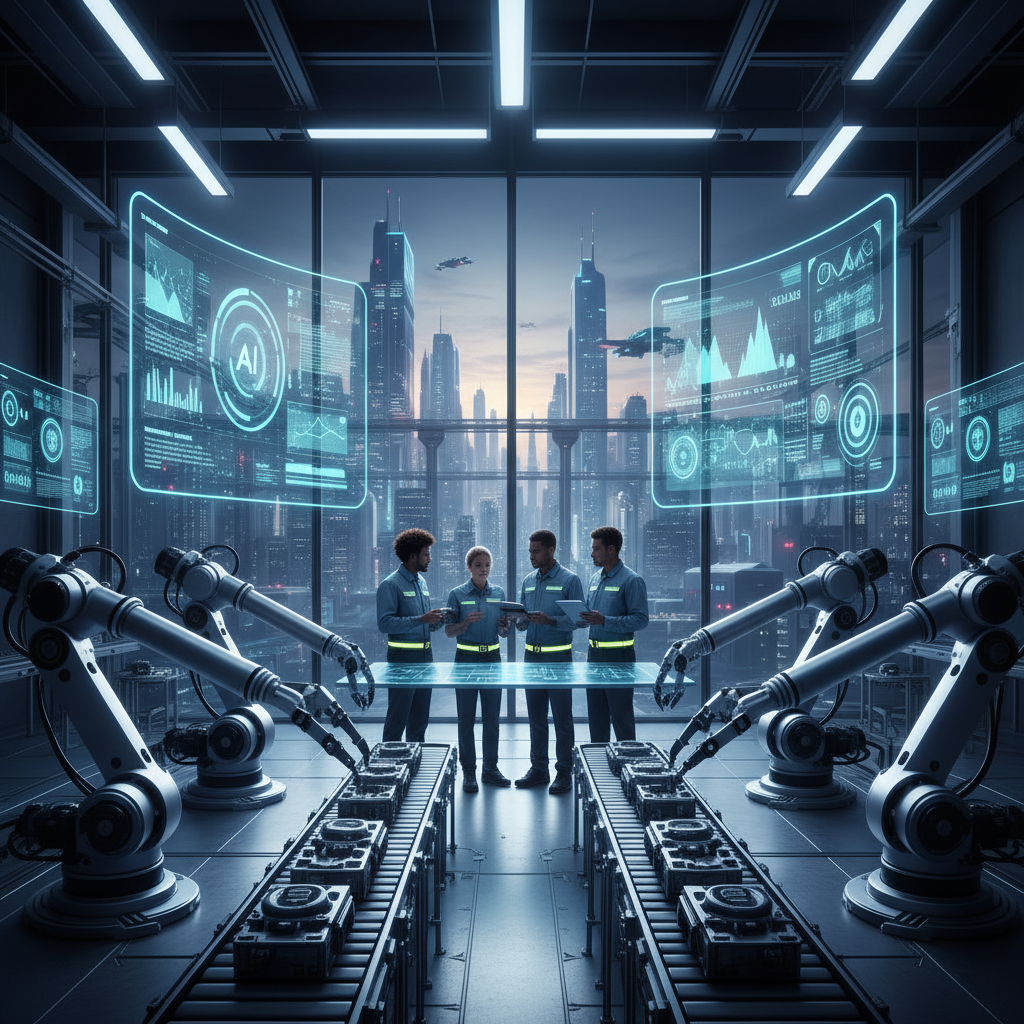
## Key Takeaways at a Glance Artificial intelligence automation is revolutionizing business and manufacturing workflows through intelligent, adaptive systems that go far beyond conventional rule sets. The following core points highlight the essential aspects and the significant difference compared to traditional automation. - **Define AI automation precisely:** AI automation uses advanced algorithms to independently learn, adapt, and execute tasks, rendering rigid static rule sets obsolete. - **Understand the fundamental difference from traditional automation:** While conventional automation follows fixed rules, AI automation offers adaptability and cognitive capabilities to handle unpredictable situations and make autonomous decisions. - **Strengthen decisions through targeted deployment:** Understanding this distinction is crucial for B2B decision-makers to unlock true competitive advantage and maximize the return on AI investments. - **Benefit from comprehensive advantages:** AI automation increases efficiency, lowers operating costs, and enables innovative business models through predictive analytics and continuous process optimization. - **Recognize key technologies of AI automation:** Data-driven learning systems, intelligent image and data processing (computer vision), and generative artificial intelligence are the pillars that enable adaptive industrial systems. - **Optimize integration strategies for existing processes:** Artificial intelligence integrates seamlessly into existing system landscapes, optimizing workflows and creating new capabilities without overhauling the entire infrastructure. - **Avoid implementation pitfalls:** Careful planning, a clear understanding of data quality, and attention to scalability are decisive for the success of AI automation projects. - **Recognize the risks of lacking differentiation:** Without a clear understanding of what sets AI automation apart, companies risk misallocations and miss the opportunity to achieve real progress—especially in specialized domains such as those supported by dropflow. This overview helps you decode the concepts of AI automation and evaluate their relevance for your organization. In the following sections, we dive deeper into the technical details, showcase practical application examples, and discuss how to successfully implement this technology in your mechanical engineering company. ## Introduction Is ongoing digitalization presenting your production processes with new challenges—especially in adhesive bonding and dispensing technology, where precision and efficiency are critical? B2B decision-makers and technical leaders in mechanical engineering increasingly recognize the fundamental shift that artificial intelligence (AI) brings to industrial automation. Manual optimization of complex production steps often reaches its limits, leading to bottlenecks and suboptimal outcomes. This article provides a sound analysis of what AI automation entails and the tangible benefits it delivers for industrial automation, particularly in bonding and dispensing applications. We offer practical insights into the technologies and use cases that can transform your manufacturing operations. Discover how dropflow supports you with solution-oriented AI and process automation to boost efficiency and secure a sustainable competitive edge. ## What Is AI Automation? A Precise Definition At its core, AI automation describes the integration of artificial intelligence (AI) technologies into automation workflows. While traditional automation relies on predefined rules and fixed sequences to execute repetitive tasks, AI automation takes a decisive step forward. It equips systems with cognitive capabilities that enable them to learn from experience, recognize patterns across large volumes of data, make informed decisions, and adapt dynamically to changing conditions. That answers the question **what is AI automation?**: It is the next evolutionary stage of automation—one that not only executes, but also analyzes and optimizes. Instead of rigid "if-then" instructions, it leverages data-driven models to master complex, variable, and even unforeseen scenarios in mechanical engineering. This empowers companies to automate processes that previously required human judgment. ## The Decisive Difference: AI Automation vs. Traditional Automation The distinction between traditional and AI-based automation is fundamental to every strategic decision in industrial manufacturing. Traditional automation systems are masters of repetition. They execute a fixedly programmed sequence of actions with precision and endurance. Their strength lies in stable, high-volume processes where parameters remain constant. AI automation, by contrast, excels in dynamic environments. Rather than relying on rigid rules, it builds on algorithms capable of interpreting data and learning from it. An AI system can, for example, detect minimal variations in material properties and adjust the process in real time to ensure consistently high product quality—a task that is impossible for purely rule-based systems. ### Why This Distinction Is Critical for B2B Decision-Makers in Mechanical Engineering A precise understanding of this difference is not an academic detail—it is a significant competitive advantage. For B2B decision-makers in mechanical engineering, choosing the right automation technology is an investment decision with far-reaching consequences. A misjudgment leads to inefficient processes, untapped potential, or costly misinvestments. Attempting to solve a highly variable process with traditional automation will fail due to constant recalibration requirements. Conversely, deploying complex artificial intelligence for a simple, repetitive task is an overinvestment. The ability to differentiate enables targeted investments in technologies that resolve real bottlenecks and deliver sustainable **process optimization**—forming the foundation for unlocking the full potential of **artificial intelligence** in production. ## Concrete Benefits of AI Automation for Mechanical Engineering Implementing AI automation solutions creates direct, measurable value that goes far beyond simply speeding up workflows. For mechanical engineering companies, these benefits manifest across core operational areas: - **Maximum Efficiency Gains:** AI systems optimize not only individual process steps, but entire value chains. They enable predictive maintenance to prevent unplanned downtime and dynamically allocate resources based on real-time data. In financial services, for instance, AI accelerates credit application processing by analyzing relevant data points in seconds, drastically reducing lead times. - **Significant Quality Improvement:** Through continuous analysis of process data, AI-assisted systems detect the smallest deviations and correct them autonomously before scrap is produced. This leads to unprecedented process stability and product consistency. Similarly, in medicine, AI supports diagnostics by analyzing imaging data for faster and more accurate findings. - **Sustainable Cost Reduction:** Higher quality means less scrap and rework. Optimized processes reduce material and energy consumption. Automated decision-making lowers administrative overhead and frees up skilled specialists for higher-value engineering tasks. In retail, AI optimizes inventory management and reduces overstocking, yielding direct cost savings. - **Increased Flexibility and Scalability:** In an era of ever-shorter product life cycles and growing variant diversity, AI automation enables rapid adaptation of production lines to new requirements without time-consuming reprogramming. The same principle applies in logistics, where AI systems dynamically reroute deliveries in response to traffic or weather changes. ## Core Technologies of AI Automation at a Glance The foundation of AI automation consists of several interlocking technological concepts that realize intelligent process workflows. For technical experts, understanding these pillars is essential: - **Data-Driven Learning Systems:** These systems form the heart of many AI applications. They analyze historical and real-time process data to identify patterns, correlations, and anomalies. Based on these insights, they make predictions and continuously improve their own performance—for example in predictive quality assurance in dispensing technology or market trend forecasting. - **Intelligent Image and Data Processing (Computer Vision):** This technology enables machines to visually "understand" their environment. In mechanical engineering, it is used for automated optical quality inspection, component identification, or robot-guided assembly, where the AI learns to detect an expanding range of defect patterns. - **Generative Artificial Intelligence:** While analytical AI interprets existing data, generative AI can synthesize new data points or engineering solutions. Potential applications in mechanical engineering include optimizing component topologies for additive manufacturing or generating optimal process parameters for complex production methods. ## Application Areas: Where AI Automation Creates Value Today The application fields for AI automation in mechanical engineering are diverse and expanding rapidly—ranging from supply-chain optimization to the fine-tuning of highly specialized manufacturing steps. ### Process Optimization in Manufacturing In general manufacturing, AI automation elevates efficiency to a new level. Predictive maintenance systems analyze machine sensor data to forecast impending failures and schedule maintenance precisely when needed. In quality assurance, camera-based AI systems take over inspection tasks that are fatiguing and error-prone for the human eye, learning continuously over time. Another example is energy optimization in production plants, where AI systems detect consumption patterns and provide actionable recommendations. ### Optimizing Specific Applications: Adhesive Bonding and Dispensing Technology An outstanding example of the potential of AI automation can be seen in **adhesive bonding and dispensing technology**, where precision and consistency are paramount. Traditional systems reach their limits when external factors such as ambient temperature, humidity, or subtle viscosity fluctuations in the medium affect the outcome. Here, **industrial automation solutions** enhanced with intelligent monitoring and control provide a decisive remedy. They monitor the dispensing process in real time, analyze material flow behavior, and dynamically adjust pressure and speed to ensure a flawless application. Solution partners like **dropflow** specialize in precisely these demanding processes—combining high-precision dispensing, curing, and digital process monitoring with intelligent automation to achieve process stability that purely rule-based approaches cannot match. ## Implementation Challenges and Proven Solutions Despite its enormous potential, introducing AI automation is not automatic. Companies face specific challenges that require a structured, strategic approach. A central pitfall is **data quality and availability**. AI systems require clean, relevant data to learn effectively. Often, this data must first be systematically captured and structured. Another hurdle is the **complexity of integration** into existing IT and shop-floor landscapes. Deep domain expertise is needed to embed AI solutions seamlessly into established environments. Employee acceptance and targeted training are equally important factors during rollout. The key to success lies in a methodical approach and choosing the right partner. Rather than launching an oversized, high-risk project, it is advisable to start with a clearly scoped pilot project (Proof of Concept). This makes it possible to gather practical experience and demonstrate concrete ROI early on. Working with specialized partners who understand both AI technology and the specific industrial application domain is decisive for defining realistic goals, evaluating the data foundation, and implementing a scalable, future-proof solution. ## Conclusion **Artificial intelligence automation** is fundamentally transforming mechanical engineering by creating flexible, learning systems that go far beyond the limits of traditional automation. Understanding this paradigm enables **B2B decision-makers** and technical specialists to make sound investments and realize genuine competitive advantages. By strategically integrating data-driven learning systems and intelligent vision processing, you not only increase efficiency and reduce costs, but also unlock new capabilities through predictive analytics and continuous process optimization. To harness the full potential of **AI automation**, it is essential to plan integration strategies carefully and account for the specific requirements of your processes—especially in adhesive bonding and dispensing technology. Avoid common pitfalls through thorough preparation and reliable data capture. The future belongs to companies that actively shape technological change rather than merely reacting to it. Discover how **dropflow** can elevate your industrial and digital automation processes to the next level. Contact us for a technical consultation to discuss your specific challenges and identify tailored solutions.